Illinois Commercial EV Incentives for Business Fleets in 2026
ComEd Rebates, Charging Credits, and What Remains After Federal Cuts
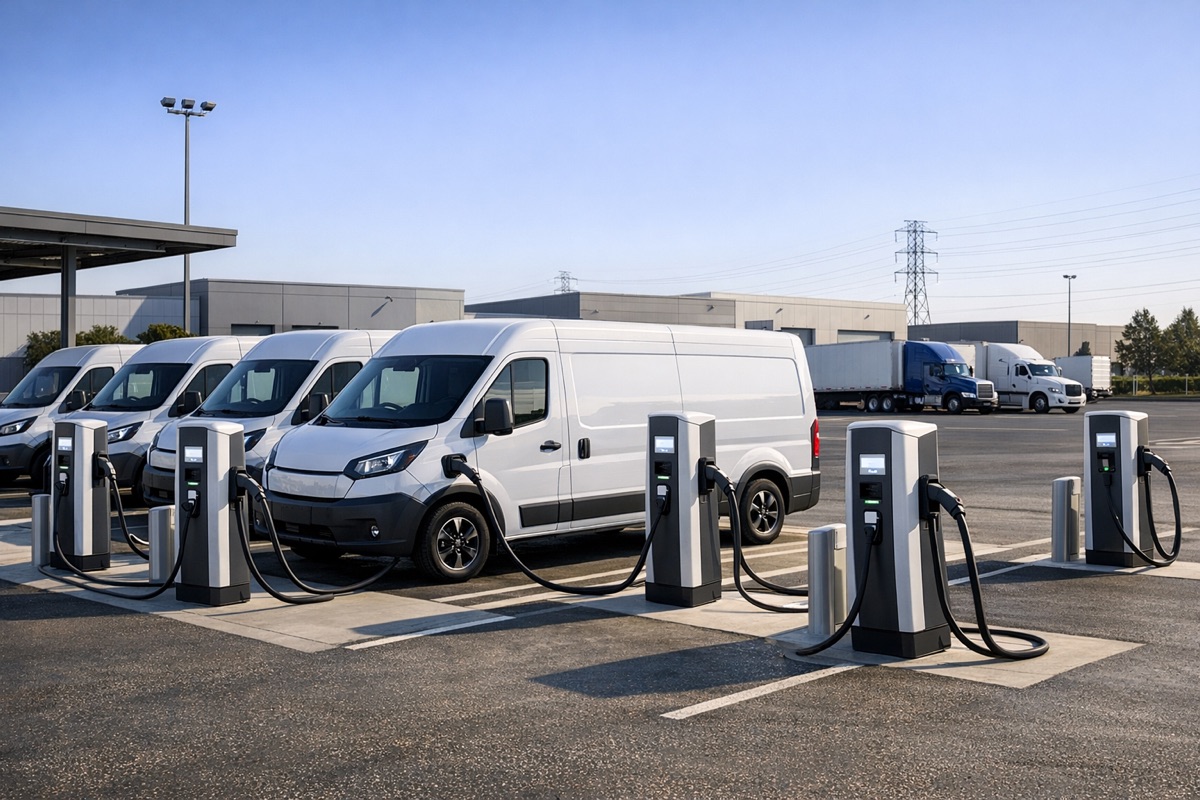
Illinois businesses can save up to $180,000 per vehicle on electric school buses, $75,000 on heavy-duty trucks, and $30,000 on delivery vans through ComEd's fleet rebate program. Add in infrastructure rebates covering up to $500,000 in charging installation costs, and 2026 is shaping up to be an excellent year for commercial fleet electrification in Illinois.
This guide breaks down every major incentive available—from ComEd's generous fleet and charging rebates to state grants and federal tax credits. Whether you're running delivery routes, managing service vehicles, or looking to attract EV-driving customers with workplace charging, there's real money on the table.
Critical Deadlines for 2026
- June 30, 2026: Federal 30C charging infrastructure tax credit expires
- 2026-2028: ComEd Beneficial Electrification Plan 2 funding available
- Ongoing: Illinois EPA DCFC grants (funding cycles vary)
1. The 2026 Commercial EV Incentive Landscape
Federal EV incentives changed dramatically in July 2025 when the One Big Beautiful Bill Act was signed into law. The bill eliminated the Commercial Clean Vehicle Credit (Section 45W) for vehicles acquired after September 30, 2025, and scheduled the 30C charging infrastructure credit to expire on June 30, 2026.
The good news: Illinois utility and state programs remain robust. ComEd's Beneficial Electrification Plan 2 commits $168 million from 2026-2028 for EV incentives. Combined with state grants, Illinois businesses can still significantly reduce electrification costs.
Available Incentives at a Glance
2. ComEd Fleet Vehicle Rebates
ComEd's Business & Public Sector EV Rebate Program is the centerpiece of commercial fleet electrification in northern Illinois. The program provides direct rebates on the purchase of new electric vehicles, with amounts varying by vehicle class and whether your organization is located in or serves low-income or Equity Investment Eligible Communities (EIECs).
| Vehicle Class | Examples | Base Rebate | LI/EIEC Rebate |
|---|---|---|---|
| Class 1-2 (Light-Duty) | Cargo vans, pickups, sedans | $5,000 | $7,500 |
| Class 3-6 (Medium-Duty) | Box trucks, delivery vehicles | $20,000 | $30,000 |
| Class 7-8 (Heavy-Duty) | Semi-trucks, large vocational | $50,000 | $75,000 |
| Transit Buses | Public transit vehicles | $80,000 | $120,000 |
| K-12 School Buses | Electric school buses | $120,000 | $180,000 |
Note: Final 2026 rebate amounts will be published by ComEd closer to program launch. Amounts shown are based on 2024-2025 program levels.
Eligibility Requirements
- ✓Commercial or industrial customer billed through ComEd
- ✓Municipalities, public agencies, and school districts
- ✓Illinois-registered nonprofits
- ✓Vehicles must be new (not used), registered in Illinois, and used for business purposes
- ✓Fleet must operate within ComEd's service territory
Qualifying for Higher LI/EIEC Rebates
You can receive enhanced rebates (50% higher) if your organization:
- • Is located in a low-income community or Environmental Justice (EJ) community
- • Is in a Restore, Reinvest, Renew (R3) community
- • Has over 50% of fleet vehicle driving serving these communities
Over 80% of ComEd's fleet rebates have gone to organizations in or serving these communities—check if your business qualifies.
3. ComEd Make-Ready Infrastructure Rebates
Beyond vehicle rebates, ComEd offers substantial funding for the electrical infrastructure needed to support EV charging. The Make-Ready Rebate Program covers the "make-ready" costs—everything from the electrical panel to the charging equipment.
Level 2 Chargers
Base Rebate
Up to $5,333/port
LI/EIEC Rebate
Up to $8,000/port
Maximum 10 ports per project
DC Fast Chargers (DCFC)
Base Rebate
Up to $667/kW
LI/EIEC Rebate
Up to $1,000/kW
Minimum 50 kW per charger; max $500,000/project
Covered Make-Ready Costs
- • Permits and inspection fees
- • Electrical panel upgrades
- • Conduit and wiring
- • Site work and trenching
- • Protective equipment
- • Transformer upgrades (if needed)
- • Associated labor costs
- • Repair and restoration
Installer Certification Required
All installations must be performed by a contractor with an active Electric Vehicle Charging Station Installer Certification from the Illinois Commerce Commission (ICC). Projects with non-certified installers do not qualify.
4. Federal 30C Tax Credit — Act Before June 30, 2026
The Alternative Fuel Vehicle Refueling Property Tax Credit (Section 30C) is one of the last remaining federal EV incentives for businesses. It provides a tax credit for installing EV charging equipment, but the clock is ticking: all projects must be placed in service by June 30, 2026.
Credit Amount
Base Credit (6%)
6% of total project costs, up to $100,000 per charging port
Enhanced Credit (30%)
30% of total project costs if prevailing wage and apprenticeship requirements are met, up to $100,000 per port
Location Requirements
The 30C credit is only available for charging equipment installed in:
- • Non-urban census tracts (rural areas)
- • Low-income community census tracts
Use the IRS's census tract lookup tool to verify your location qualifies.
Stacking with ComEd Rebates
The 30C tax credit can be combined with ComEd Make-Ready rebates. For a qualifying DCFC installation:
Example for illustrative purposes. Consult a tax professional for your specific situation.
5. Illinois EPA and State Grants
The Climate and Equitable Jobs Act (CEJA) established several grant programs administered by the Illinois EPA for transportation electrification. These programs offer substantial funding for businesses installing public charging infrastructure.
Illinois EPA DC Fast Charger Grants
Priority is given to projects serving medium- and heavy-duty vehicles, public transit, and fleet operations. Enhanced funding is available for installations in underserved and environmental justice communities.
Transportation Electrification Infrastructure Fund
CEJA allocated $70 million for transportation electrification infrastructure, with priority for:
- • Medium- and heavy-duty vehicle charging
- • Fleet electrification projects
- • Public transit charging infrastructure
- • Projects in environmental justice communities
Driving a Cleaner Illinois
This program uses Volkswagen Settlement funds, EPA DERA grants, and federal CMAQ funding to support diesel emission reduction projects, including fleet electrification. Contact the Illinois EPA for current funding availability and application cycles.
6. Ameren Illinois Programs
Businesses in central and southern Illinois served by Ameren have access to different programs than ComEd customers. While Ameren's commercial EV rebates are less extensive, they offer valuable resources and rate programs for fleet operators.
Ameren Business EV Programs
- Commercial EV Rate Program: Optional rate program providing lower charging costs during off-peak hours, designed to benefit business fleets.
- Fleet Assessment Services: Free consultations to evaluate your fleet's electrification potential and infrastructure needs.
- EV Partners Network: Certified contractors who can help secure incentives and handle charging infrastructure installation.
- Workplace Charging Resources: Sample policies, guides, and technical support for installing employee charging.
Ameren customers can still access federal 30C credits and Illinois EPA grants. Contact Ameren at their business EV programs page for current offerings.
7. Offering EV Charging to Your Customers
Installing EV charging can attract customers, differentiate your business, and create a new revenue stream. Hotels, restaurants, retail stores, and destination businesses are increasingly adding charging as an amenity.
Benefits of Customer-Facing Charging
Attract EV Drivers
EV owners actively seek businesses with charging. Appear in charging apps and maps.
Extended Dwell Time
Charging takes 30-60 minutes for Level 2, increasing time customers spend at your business.
Revenue Opportunity
Charge for electricity and potentially earn a profit, or offer free charging as a perk.
Sustainability Image
Demonstrate environmental commitment to increasingly eco-conscious customers.
Choosing the Right Charger Type
Level 2 (Best for most businesses)
Adds 12-40 miles/hour. Ideal for restaurants, retail, offices where customers stay 1-4 hours. Cost: $3,000-$8,000 installed.
DC Fast Charging (High-traffic locations)
Adds 100-200+ miles in 30 minutes. Best for gas stations, highway locations, convenience stores. Cost: $50,000-$150,000+ installed.
Maximizing Incentives for Customer Charging
Public-facing chargers may qualify for multiple incentive programs:
- • ComEd Make-Ready Rebates for infrastructure costs
- • Federal 30C Tax Credit (if in qualifying census tract)
- • Illinois EPA DCFC Grants for fast chargers (publicly accessible)
- • Local municipal incentives (City of Naperville offers $500/charger, check your municipality)
8. Building Your Commercial EV Incentive Strategy
With multiple overlapping programs, developing a coordinated strategy can maximize your savings. Here's a practical approach for Illinois businesses.
Assess Your Fleet and Facility Needs
Identify which vehicles make sense for electrification. Delivery routes, service vehicles, and predictable-mileage applications typically have the strongest economics. For charging infrastructure, assess your electrical capacity and parking availability.
Check LI/EIEC Eligibility
Determine if your business is in or serves low-income or Equity Investment Eligible Communities. This can increase ComEd rebates by 50%—from $5,000 to $7,500 for light-duty vehicles, for example.
Prioritize 30C-Eligible Projects
If you're in a qualifying census tract, fast-track charging infrastructure projects to capture the federal 30C credit before it expires June 30, 2026. Site evaluations, procurement, and installation all need to happen within this window.
Use Free Utility Resources
ComEd offers free Fleet Electrification Assessments to help businesses evaluate their options. Ameren provides similar consultation services. These assessments can identify the best vehicles and infrastructure for your specific operation.
Work with Certified Installers
Use ICC-certified EV Service Providers (EVSPs) to ensure your project qualifies for utility rebates. They can also help navigate the application process and ensure all documentation is complete.
Example: Medium-Duty Fleet Electrification
A Chicago-area delivery company purchasing 3 Class 4 electric delivery vans with depot charging:
*LI/EIEC-eligible businesses could receive $90,000 in vehicle rebates and $48,000 in make-ready rebates, reducing net cost to approximately $155,000.
The Bottom Line
Despite the loss of federal vehicle credits, Illinois remains one of the best states for commercial fleet electrification. ComEd's programs alone can cover 30-50% of vehicle costs and most infrastructure expenses. For businesses in qualifying census tracts, the federal 30C credit adds significant additional value—but only until June 30, 2026.
The economics are particularly strong for predictable-route fleets (delivery, service, campus vehicles) where overnight depot charging eliminates the need for fast charging infrastructure. Medium- and heavy-duty vehicles, which have the highest rebates, often see the fastest payback when fuel and maintenance savings are included.
Start with a Free Assessment
Contact ComEd's EV team to schedule a free Fleet Electrification Assessment, or visit their Business EV Rebate page to learn more about current programs and application windows.