How AI Data Centers Are Driving Up Illinois Electricity Costs
Record Capacity Prices, Grid Strain, and What It Means for Your Bill
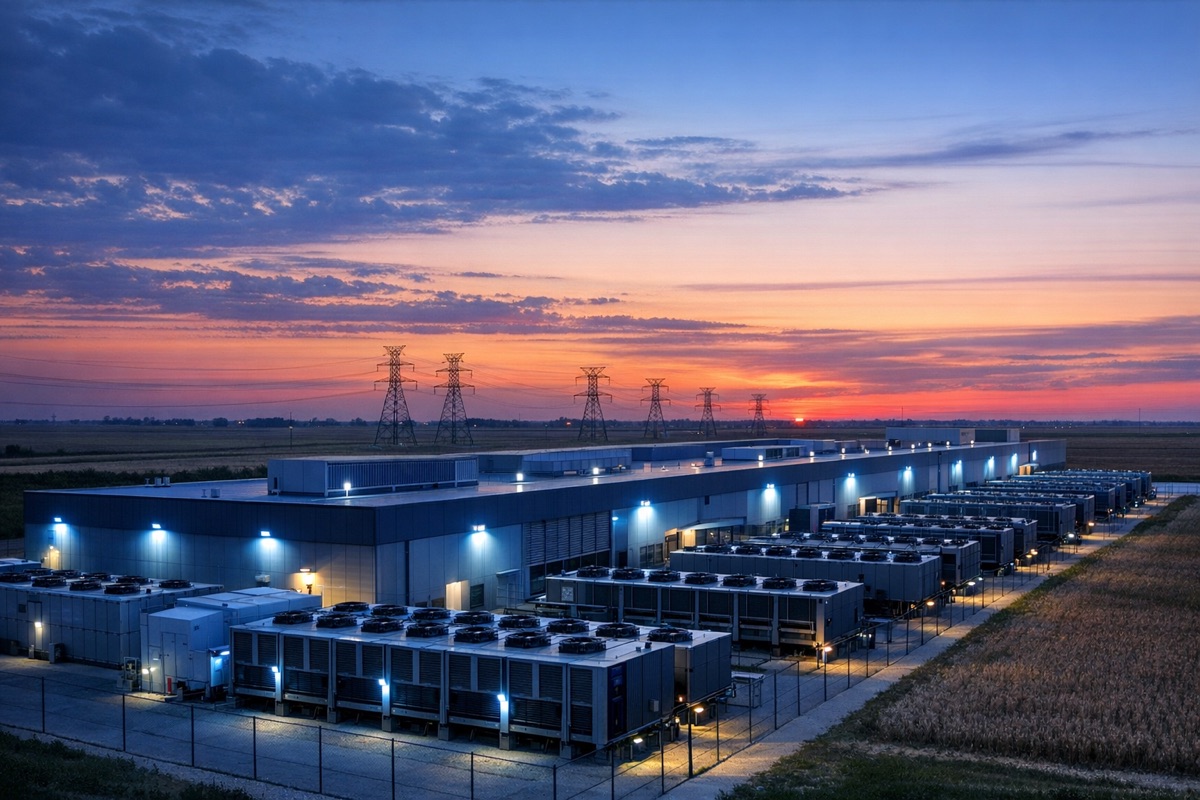
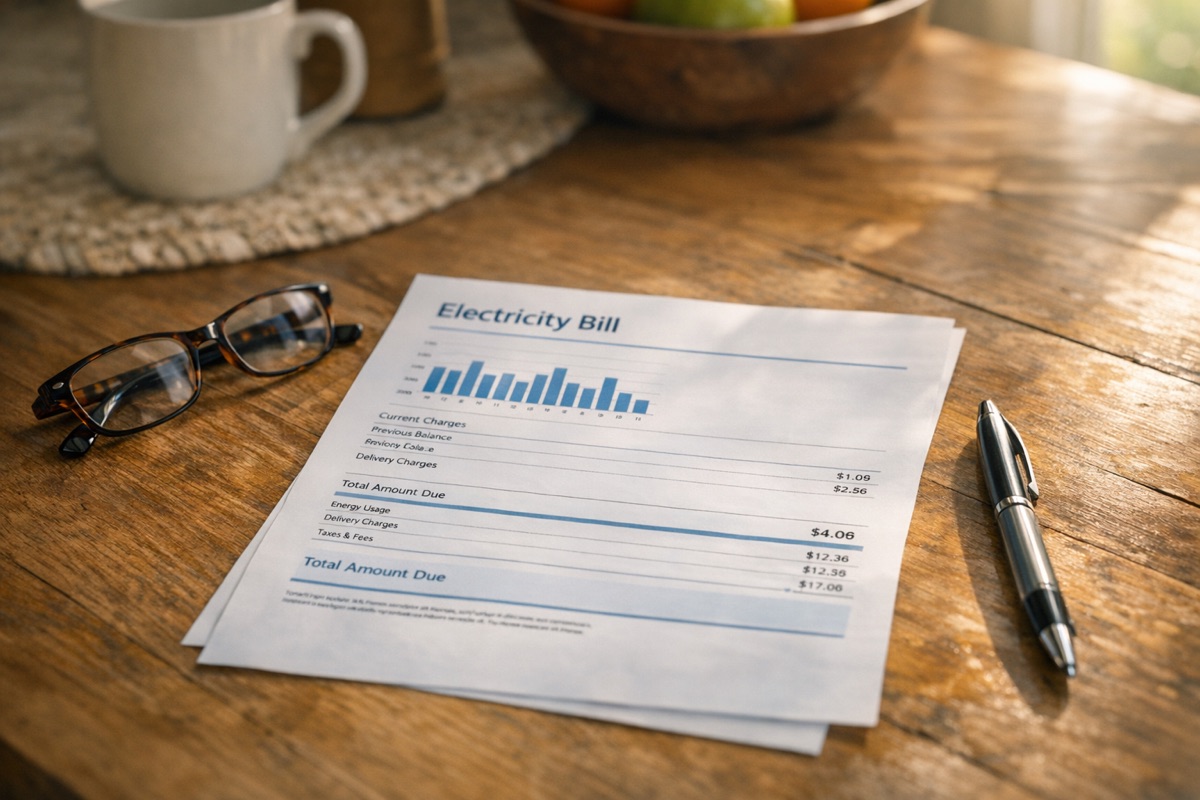
Illinois electricity bills jumped roughly 15% between 2024 and 2025—more than three times the national average. The capacity portion alone on a typical ComEd bill surged from $0.91/month to around $8.00/month, a 775% increase. A big part of the reason sits inside the windowless concrete buildings popping up across the Chicago suburbs: AI data centers.
The state now hosts 244 data centers, making it the fourth-largest data center market in the country. And with 22 more projects in the pipeline adding nearly 3,900 megawatts of new capacity, the pressure on the grid—and on your wallet—is only growing. Here's what's actually happening, why it matters to every ComEd and Ameren customer, and what Illinois is doing about it.
How Much Power Do These Facilities Actually Use?
Illinois data centers currently have over 1,200 megawatts of operational capacity and consume about 12 terawatt-hours of electricity per year. For context, that's enough to power roughly 1.1 million homes. A single large AI training facility can draw 600 megawatts—equivalent to the entire electricity demand of a mid-sized city.
The growth trajectory is steep. Data centers consumed 5.43% of all Illinois electricity as of January 2025. Nationally, projections show data center electricity demand could grow 29% to 166% by 2030 compared to 2023 levels, depending on the pace of AI adoption.
Illinois Data Center Energy at a Glance
Source: Illinois Policy Institute, 2025
Northern Illinois is where the action is concentrated. Commonwealth Edison has struck agreements with eight data center developers, requiring over $2 billion in nonrefundable payments just to cover grid connection costs. An estimated 6,000 megawatts of new demand is expected over the coming decade—enough to absorb all of the region's current surplus generating capacity and then some.
How Data Centers Are Driving Up Your Electric Bill
The connection between data centers and your electricity bill runs through a mechanism called the capacity auction. PJM Interconnection, the regional grid operator covering Illinois and 12 other states, holds annual auctions where power plants bid to provide electricity capacity. When demand forecasts go up, prices go up with them.
The results have been dramatic. PJM's capacity auction prices have increased from $28.92 per megawatt-day in the 2024/25 period to $269.92 for 2025/26—an 830% jump. The most recent auction for 2027/28 hit the price cap at $333.44/MW-day, setting a record for the third consecutive auction.
PJM Capacity Auction Prices ($/MW-day)
Source: PJM Interconnection capacity auction results
PJM's Independent Market Monitor attributed 70% of the cost increase in one recent auction—$9.3 billion—directly to data center demand. In the most recent auction, data centers accounted for $6.5 billion, or 40%, of the total $16.4 billion in capacity costs. The forecast peak load for 2027/28 is approximately 5,250 MW higher than the previous year's forecast, with nearly 5,100 MW of that increase coming from data centers alone.
The bottom line for your bill: ComEd rates jumped approximately 45% in summer 2025 compared to the previous summer. The Citizens Utility Board estimates the average customer is paying about $11 extra per month—over $130 per year—with some consumers reporting triple-digit increases.
Why Illinois Is a Data Center Magnet
Illinois isn't a random target for this buildout. Several factors make it attractive:
- Nuclear power: Illinois produces more nuclear energy than any other state, with 11 reactors generating 54% of in-state electricity. Data center operators want access to this reliable, carbon-free baseload power.
- Network infrastructure: Chicago is a major internet exchange hub. The city's fiber optic backbone and peering points make it ideal for low-latency AI workloads.
- Tax incentives: Until recently, Illinois offered data centers sales tax exemptions and other benefits for up to 20 years in renewable five-year increments.
- Water access: AI data centers need enormous cooling capacity. Facilities consume between 18,000 and 550,000 gallons of water daily depending on size—and Illinois has historically had ample freshwater access.
But these same advantages create problems. Meta's planned facility in DeKalb County is projected to face a water deficit by 2030. The nuclear plants that attract data centers are the same ones keeping residential bills lower than they'd be otherwise—and diverting that capacity to data centers tightens supply for everyone else.
Grid Reliability: A Growing Risk
Rising costs aren't the only concern. The sheer volume of data center demand is straining the grid's ability to keep the lights on during peak periods.
In PJM's most recent capacity auction, the grid operator procured 145,777 MW—about 6,625 MW below its 20% installed reserve margin target. This marks the first time the entire PJM region has fallen short of its reliability requirement. Northern Illinois currently exports about 5,000 MW of surplus capacity to neighboring regions, but the 6,000 MW of planned data center demand will consume all of that surplus and potentially create a deficit.
What does a capacity shortfall mean? It increases the risk of rolling blackouts during extreme weather events—exactly the kind of heat waves and polar vortexes that Illinois regularly experiences. It also drives capacity prices even higher, creating a feedback loop that pushes bills up further.
What Illinois Is Doing About It
The political response has been swift by Springfield standards. Two major actions are underway:
The POWER Act
Introduced in February 2026, the POWER Act (SB4016/HB5513) would create some of the strongest data center regulations in the country. Key provisions include:
- Requiring data centers to procure their own clean energy generation proportional to their consumption during peak demand
- Mandatory annual payments into a consumer assistance fund for programs like LIHEAP (utility bill assistance) and whole-home retrofits for income-qualified customers
- Water usage reporting requirements, including intake and discharge volumes
- Community engagement mandates for new facility construction
Tax Incentive Freeze
Governor Pritzker announced a two-year suspension of state tax incentives for new data center developments, effective July 1, 2026. The move signals that Illinois is rethinking the cost-benefit equation of attracting these facilities without adequate consumer protections in place.
The debate is ongoing. Industry groups argue data centers bring jobs and tax revenue—the sector generated $1.85 billion in total fiscal support in 2023 and employs roughly 4,900 workers statewide. Consumer advocates counter that those benefits don't justify billions in higher electricity bills for millions of households.
What You Can Do to Protect Your Electricity Bill
While policy debates play out in Springfield, there are concrete steps you can take right now to reduce the impact of rising electricity costs.
Shift to Real-Time or Time-of-Use Pricing
ComEd's Hourly Pricing program lets you pay market rates instead of a fixed supply charge. Research shows 97% of Illinois electricity customers could save money on real-time pricing without changing their habits. Starting June 2026, ComEd will also offer a new time-of-use rate to all residential customers.
Monitor Price Spikes
Real-time price tracking tools like Electrac send SMS alerts when electricity prices spike, so you can delay energy-intensive tasks like running the dishwasher, doing laundry, or charging your EV to cheaper off-peak hours.
Invest in Solar and Storage
As grid prices rise, the payback period for residential solar and battery storage shortens. Illinois offers solar renewable energy credits (SRECs) and net metering that can offset a significant portion of your bill.
Engage with the Policy Process
The Citizens Utility Board (CUB) advocates for residential ratepayers. Following their work and contacting your state legislators about data center regulation directly influences the policies that determine how costs are distributed between tech companies and households.
What to Expect Going Forward
The trajectory is clear: more data centers are coming, and AI workloads are only getting more energy-intensive. The question is whether regulatory frameworks can keep pace.
If the POWER Act or similar legislation passes, data centers would bear a larger share of their grid impact costs rather than spreading them across all ratepayers. If it doesn't, the current dynamic—where projected data center demand drives up capacity prices paid by every household—will likely intensify through at least 2030.
PJM's capacity auctions have hit the price cap for three consecutive years. With each auction reflecting growing demand forecasts driven largely by data centers, the pressure on residential bills shows no sign of easing without structural changes to how these costs are allocated.
The Bottom Line
AI data centers are reshaping Illinois' energy landscape. The 775% surge in capacity charges, the record-breaking auction prices, and the first-ever reliability shortfall in the PJM region all trace back, in significant part, to the massive electricity appetite of these facilities. Illinois residents are already paying measurably more because of it.
The good news: Illinois is taking this more seriously than most states. The POWER Act, the tax incentive freeze, and growing bipartisan attention to the issue suggest that some form of consumer protection is likely. In the meantime, understanding why your bill is rising and taking advantage of programs like real-time pricing can help blunt the impact while the policy catches up.