ComEd EV Charger Rebate Program 2026
Complete Guide to Illinois Home Charging Incentives
June 2026 Update
- The 2026 rebate program is open through December 31, 2026. Both tiers are accepting applications: up to $1,000 (standard) and up to $2,500 (low-income / LIC / EIEC). Rebates are first-come, first-served until funds are exhausted or the program term ends.
- The federal EV charger tax credit expired June 30, 2026. The Section 30C Alternative Fuel Vehicle Refueling Property Credit (up to $1,000) ended on that date, so installations completed afterward no longer qualify.
- The CRGA brought new time-of-use rate options from ComEd and Ameren effective June 1, 2026 — including ComEd's new Delivery Time of Day (DTOD) rate — for more ways to save on EV charging.
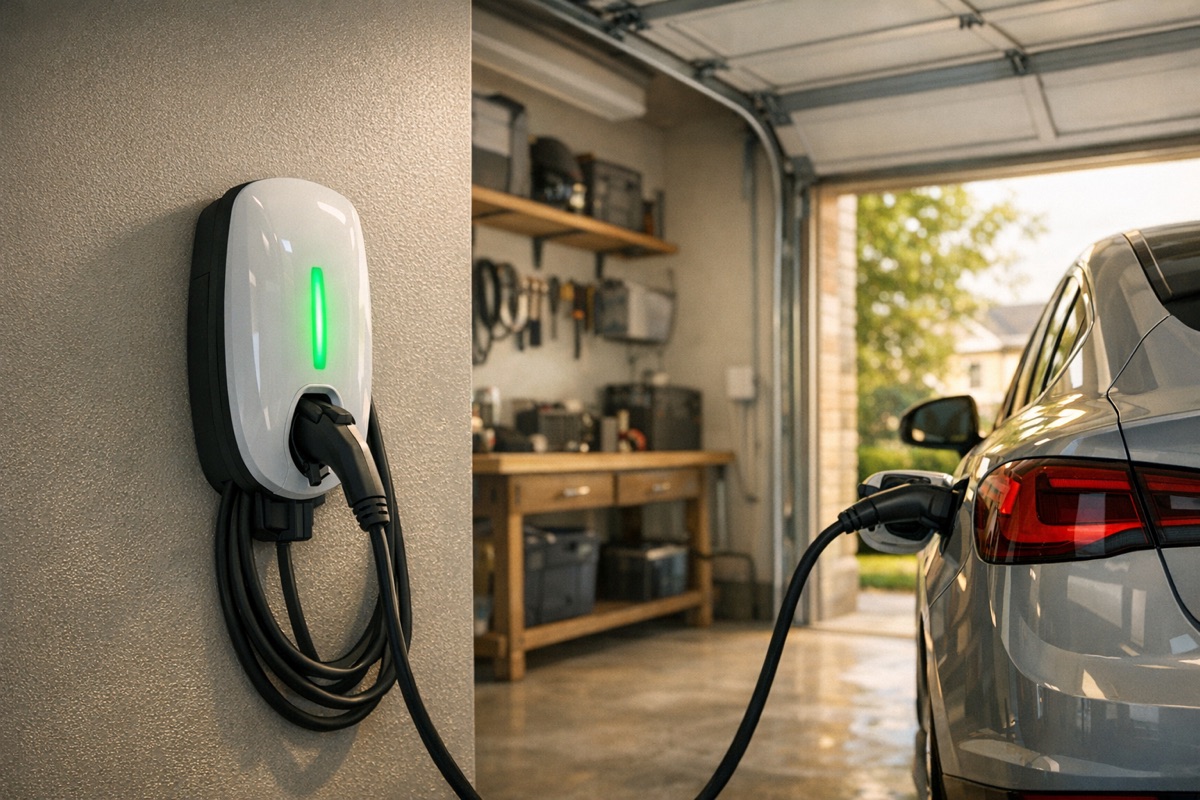
ComEd offers Illinois residents up to $2,500 to offset the cost of installing a Level 2 EV charger at home. This guide covers everything you need to know: eligibility requirements, rebate amounts, installation costs, and how to apply.
With electricity prices fluctuating, pairing your home charger with a time-variant rate can save you 50-60% on charging costs. Tools like Electrac help you track when rates are lowest.
1. Am I Eligible for the ComEd EV Charger Rebate?
To qualify for the ComEd EV rebate in Illinois, you must meet all of these requirements:
Be a ComEd residential customer
Single-family homes or multi-family residences with 2 units or fewer.
Purchase a WiFi-enabled Level 2 smart charger
Must be purchased on or after February 1, 2024. Popular options include ChargePoint Home Flex, Tesla Wall Connector (Gen 3+), JuiceBox 40, and Emporia Smart EV Charger.
Use an ICC-certified electrician (EVSP)
Installation must be performed by an Illinois Commerce Commission certified EV Service Provider.
Enroll in a time-variant electricity rate
You must enroll in ComEd Hourly Pricing or a similar time-of-use plan and stay enrolled for at least 3 years. See our guide to dynamic pricing to learn how this saves you money.
Apply within 90 days of installation
Funding is limited and distributed first-come, first-served.
Don't own an EV yet?
You can still apply for the rebate. This is a great way to prepare your home for future EV ownership while the program has funding available.
2. How Much Can I Get?
The ComEd EV charger rebate amount depends on your household income or location:
Standard Rebate
Available to all ComEd residential customers who meet the eligibility requirements.
Select Customer Rebate
Enhanced rebate if you qualify based on:
- • Household income ≤ 80% of Illinois median, OR
- • Residence in an Equity Investment Eligible Community (EIEC)
What does the rebate cover?
The rebate applies to your total project cost, including:
- • Level 2 charger equipment
- • Installation labor
- • Electrical panel upgrades
- • Permits and inspections
- • Wiring and conduit
- • Dedicated 240V circuit
3. Why Level 2? Comparing Charger Types
The ComEd rebate covers Level 2 chargers because they're practical for daily EV use. Here's how the charging levels compare:
Level 1 (Standard Outlet)
120V - No installation needed
- • 2-5 miles of range per hour
- • 20-40 hours for a full charge
- • Best for plug-in hybrids or light use
- • Uses standard wall outlet
Level 2 (Dedicated Circuit)
240V - Requires professional installation
- • 12-40 miles of range per hour
- • 3-8 hours for a full charge
- • Ideal for daily EV drivers
- • Eligible for ComEd rebate
Level 2 chargers are 6-8x faster than Level 1, making overnight charging practical for most EVs. Level 3 (DC Fast Charging) is used at public stations and isn't available for home installation.
4. What Does EV Charger Installation Cost in Illinois?
Total installation costs typically range from $1,500 to $4,000+ depending on your home's electrical setup and charger location.
Typical Cost Breakdown
Factors That Affect Your Installation Cost
Distance from electrical panel
The farther your garage or parking area is from your main panel, the more wiring and conduit required. A charger 100 feet from the panel costs significantly more than 10 feet away.
Panel capacity
If your existing electrical panel doesn't have capacity for a 240V/40-50 amp circuit, you'll need a panel upgrade. Older homes in Chicago often require this.
Installation complexity
Running wiring through finished walls or installing on an exterior wall requiring weatherproofing increases labor costs.
Charger features
Basic WiFi-enabled chargers start around $400, while premium models with longer cables or advanced features can exceed $900.
Example: Your Out-of-Pocket Cost
Select Customers eligible for the $2,500 rebate would pay $0 out-of-pocket for this installation.
5. How to Get the ComEd EV Rebate
As of 2026, your installer (EVSP) submits the rebate application on your behalf. Here's the process:
Choose your charger and find a certified installer
Select a WiFi-enabled Level 2 charger. Get quotes from 2-3 ComEd-approved EVSPs—they'll handle both the installation and rebate application.
Enroll in a time-variant rate
Sign up for ComEd Hourly Pricing or an alternative supplier's time-of-use plan before or during installation.
Complete installation
Your EVSP installs the charger, handles permits, and takes required documentation photos.
Your installer submits the rebate application
The EVSP submits the application within 90 days of installation. You'll need to provide:
- • Proof of charger purchase (receipt)
- • Proof of time-variant rate enrollment
- • Income documentation (if applying for $2,500 rebate)
Rebate is applied to your project
The rebate is typically paid to your installer, who applies it to your installation quote. Confirm with your EVSP how the rebate will be handled before signing a contract.
Don't delay
Rebates are first-come, first-served. Once annual funding is exhausted, you'll have to wait for the next cycle. Schedule your installation as soon as possible.
6. Finding a Certified Installer
You must use a ComEd-approved EV Service Provider (EVSP) to qualify for the rebate. Your EVSP handles both the installation and rebate application.
How to find a certified installer:
- 1. Use ComEd's EVSP search tool to find approved installers in your area
- 2. Get quotes from 2-3 installers to compare pricing
- 3. Confirm they will handle the rebate application for you
Using a non-certified installer?
You will not be eligible for the rebate. The potential savings (up to $2,500) far outweigh any discount from a non-certified electrician.
7. 2026 Program Details
Current Program (2026)
- EVSP-only applications: Your installer submits the rebate application on your behalf—you cannot apply directly.
- Rebate levels: $1,000 (standard) and $2,500 (Select Customers).
- Equity focus: Significant funding reserved for low-income and EIEC communities.
- 2026 funding: ~$70 million total for EV initiatives, including more than $4 million earmarked for residential chargers, more than $35 million for business fleet EVs, and more than $29 million for make-ready infrastructure.
- Application window: Both tiers accept applications for charger applications submitted January 1 – December 31, 2026, first-come, first-served until funds are exhausted.
Federal Tax Credit Deadline
The Section 30C Alternative Fuel Vehicle Refueling Property Credit (up to 30% of costs, max $1,000) expired June 30, 2026. This was accelerated from its original 2032 expiration by the One Big Beautiful Bill Act. Charging equipment placed in service after that date no longer qualifies for the federal credit, though the ComEd rebate remains available.
Program History
ComEd has invested more than $160 million in EV initiatives since the program launched in February 2024, including approximately $70 million announced in February 2026 for the latest round. More than 10,000 EV chargers have been funded to date across northern Illinois.
For the latest program details, visit the official ComEd rebate page or email [email protected].
8. Frequently Asked Questions
Does ComEd pay for the entire cost of EV charger installation?
ComEd rebates up to $1,000 (standard) or $2,500 (Select Customers), but cannot exceed your actual cost. For installations in the $1,500-$2,500 range, the rebate covers most or all of the expense. Higher-cost installations will have some out-of-pocket.
Can I get the rebate if I already installed a charger?
Yes, if installed on or after February 1, 2024, and you apply within 90 days. You must have used an ICC-certified electrician and enroll in a time-variant rate.
What if I don't own an EV yet?
You can still get the rebate. Installing a charger now is a great way to prepare for future EV ownership while funding is available.
Can I combine the ComEd rebate with the federal tax credit?
The federal Alternative Fuel Vehicle Refueling Property Credit (Section 30C) provided up to 30% (max $1,000) and could be stacked with the ComEd rebate, but it expired June 30, 2026 — charging equipment placed in service after that date no longer qualifies. The ComEd rebate remains available. Consult a tax professional for details.
What if I move before the 3-year rate requirement ends?
Contact ComEd directly. The requirement is generally tied to your account, not the property, but provisions may exist for relocation.
Are Tesla Wall Connectors eligible?
Yes. Tesla Wall Connectors (Gen 3+) are WiFi-enabled and eligible. They also work with non-Tesla EVs using an adapter.
How can I track electricity prices to save more on charging?
Use the Electrac Dashboard to track real-time ComEd prices and set alerts for when rates drop. Most EV owners save 50-60% by charging during off-peak hours (typically 10pm-6am).
Maximize your EV charging savings
After installing your charger and enrolling in a time-variant rate, use Electrac to track real-time ComEd prices and set up alerts for when rates are lowest. Most EV owners save 50-60% by charging during off-peak hours (typically 10pm-6am).